June 16, 2026 · Stephanie Harris
The 8 Dimensions of Wellness: A Guide to the Wellness Wheel
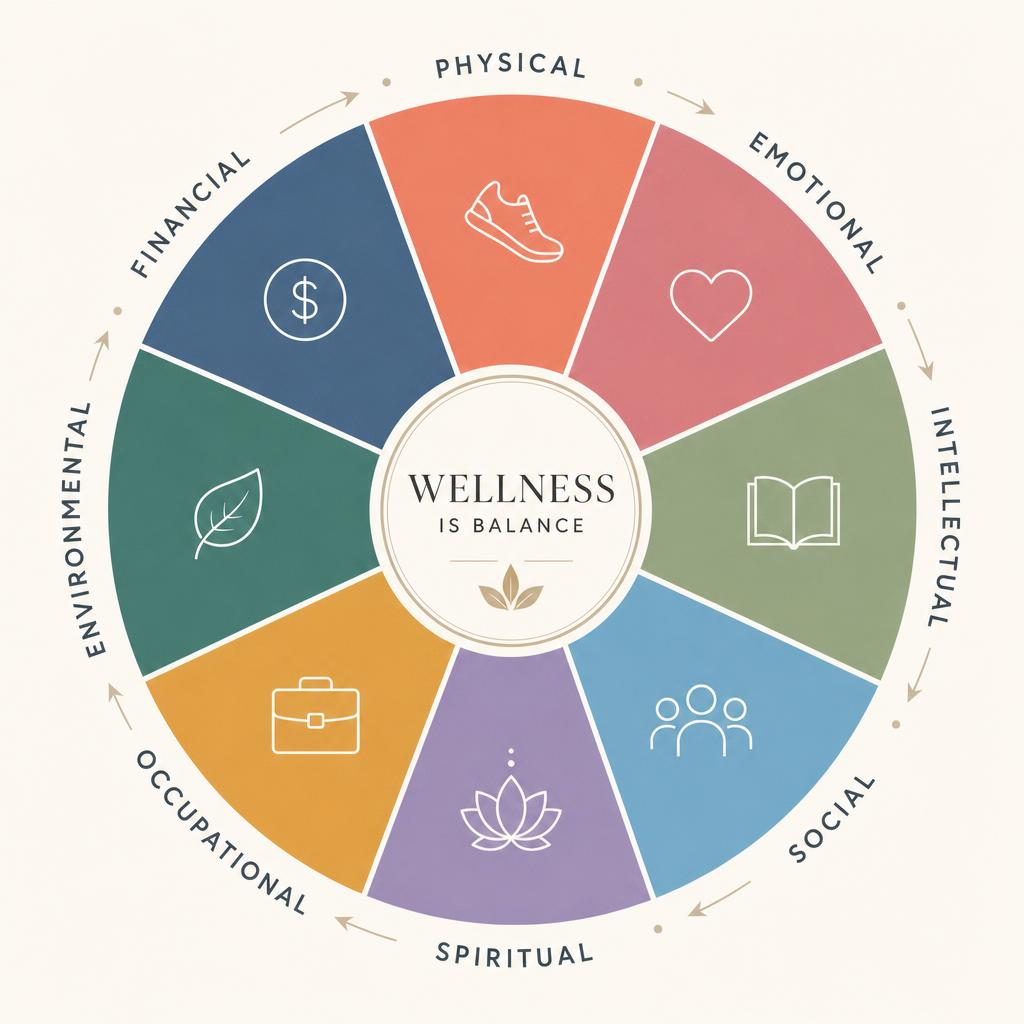
When most people hear the word 'wellness,' they think of food and exercise. But true wellness is so much bigger than that. It's the way you sleep, the way you handle stress, the relationships you nurture, the work you do, the space you live in, and the meaning you find in your days. Wellness is whole-life — and that's exactly what the Wellness Wheel is designed to show us.
The Wellness Wheel is a simple, powerful tool built around the 8 dimensions of wellness. Together, these dimensions give you a clear picture of where you feel strong, where you feel stretched, and where a little intentional attention could create real change. Below is a grounded walk through each one, with reflection prompts you can use today.
1. Physical Wellness — This is the dimension we know best: how you move, eat, sleep, and care for your body. Physical wellness isn't about a number on the scale or a perfect workout streak. It's about energy, strength, and feeling at home in your body. Ask yourself: Am I sleeping enough? Am I moving in ways I enjoy? Am I nourishing — not just feeding — myself?
2. Emotional Wellness — Emotional wellness is the ability to feel your feelings, name them, and move through them without getting stuck. It's emotional honesty, self-compassion, and the skill of regulating your nervous system. Ask yourself: Do I let myself feel hard emotions? Do I have healthy ways to process stress?
3. Intellectual Wellness — Your mind needs nourishment too. Intellectual wellness is about curiosity, learning, and engaging with ideas that stretch you. It doesn't have to mean books or classes — it can be conversations, podcasts, hobbies, or creative projects. Ask yourself: When was the last time I learned something just for joy?
4. Social Wellness — Humans are wired for connection. Social wellness is about the quality of your relationships, the depth of your community, and your ability to give and receive support. Ask yourself: Who fills me up? Who drains me? Where do I need to invest more — and where do I need to set a boundary?
5. Spiritual Wellness — Spiritual wellness isn't necessarily religious. It's your sense of meaning, purpose, and connection to something bigger than yourself — whether that's faith, nature, service, or quiet reflection. Ask yourself: What grounds me? What gives my life meaning?
6. Occupational Wellness — How you spend your working hours matters. Occupational wellness is about finding purpose, growth, and balance in your work — paid or unpaid. Ask yourself: Does my work align with my values? Where could I create more boundaries or more meaning?
7. Environmental Wellness — Your surroundings shape you more than you realize. Environmental wellness is about the spaces you live and work in, the products you use, and your relationship to the natural world. Ask yourself: Does my space feel calm? Do I spend time outside?
8. Financial Wellness — Money is a wellness issue. Financial wellness is feeling clear, in control, and aligned with your values around money — not chasing wealth, but reducing the quiet stress of money you avoid thinking about. Ask yourself: Where am I clear? Where am I avoiding?
How to use the Wellness Wheel — Draw a circle and divide it into 8 slices, one for each dimension. Shade each slice from the center (low) to the edge (thriving) based on how you feel right now. The shape you create tells the truth: a lopsided wheel is bumpy to ride. A balanced wheel rolls smoothly. You don't need every dimension at a 10 — you need awareness, and one small, aligned next step.
This is exactly the kind of work we do together in coaching. If you'd like support mapping your own wellness wheel and creating a plan that honors all of you — not just the parts that fit on a fitness tracker — I'd love to connect. A free 20-minute consultation is a beautiful place to begin.